Blog
WHY THE RIDICULOUS RRA FINES EXPOSE LABOUR’S ANTI-LANDLORD AGENDA

The
Labour government has now made its position very clear, and it has done so with
fine levels so extreme they make a mockery of criminal sentencing.
The
new penalties revealed by Property118 show that the Renters’ Rights Act is not
about “levelling the playing field” between landlords and tenants. Instead,
they reveal a system that treats landlords as a source of revenue, not as
housing providers.
When
the fines were first published, they read less like regulation and more like
punishment designed to ensure nobody dares step out of line again.
For
example, landlords who repeatedly fail to register their personal details on
the new landlord database could face a £40,000 penalty. On top of that, their
personal information would be publicly accessible.
This
issue was also highlighted by The Times, which noted that repeated
non-compliance could even result in criminal prosecution.
This
raises an obvious question. Why is an administrative mistake in the private
rented sector treated as a greater public danger than offences such as
dangerous driving, assault in some cases, or corporate negligence?
Landlords
on the Property118 forum have been quick to point out that the statutory
maximum fine for driving at 100mph in a 30mph zone is £1,000.
Yet
failing to register your name and address on a database could now cost forty
times that amount.
If
this is the response to resistance over one landlord register, it raises
concerns about what might happen to those who resist Labour’s wider Digital ID
plans.
Councils Keep the Cash
The
government insists these penalties are proportionate. But proportionate to
what?
Councils
already have a history of inconsistent enforcement and, in some cases,
aggressive behaviour towards landlords.
Under
selective licensing, civil penalties have been used by some councils to plug
budget gaps, with the revenue remaining at local level.
Giving
those same councils a new set of fines reaching £35,000 or more, while allowing
them to keep the money, creates serious concern.
The
RRA guidance does state, right at the very bottom, that councils can retain
funds for enforcement and must pass on any unused money to central government.
Few
landlords believe that will happen in practice.
Can Landlords Trust Councils?
There
is little reason for landlords to trust councils to apply these powers fairly.
Recent experience does not inspire confidence.
Many
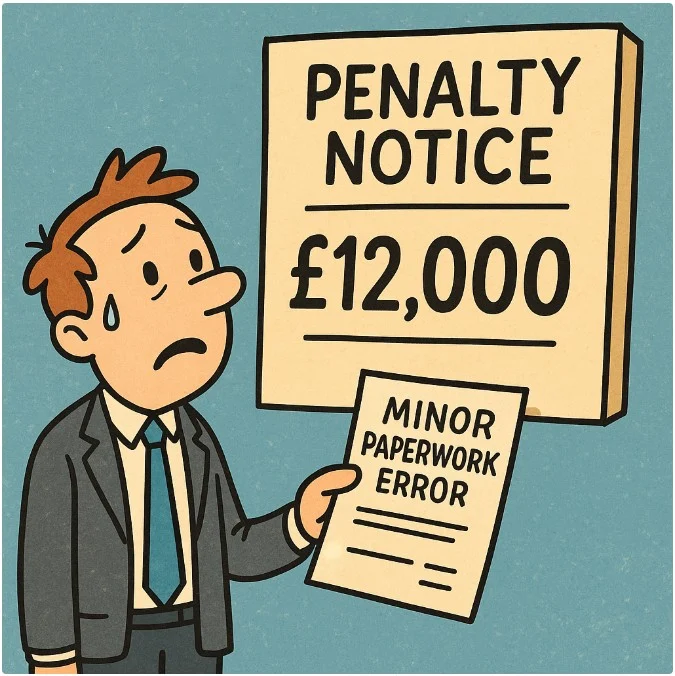
landlords have already received disproportionate penalties for minor paperwork
errors.
Soon,
councils will also gain a statutory right to enter rental properties from
Christmas.
It
is difficult to believe this will be exercised with restraint.
There
are growing concerns that councils will carry out inspections in search of
faults, particularly when they now have a strong financial incentive to do so.
“Landlords Have Nothing to Fear”
Ministers
frequently claim that good landlords have nothing to fear and that the RRA is
not intended to push landlords out of the private rented sector.
That
claim is hard to accept.
A
landlord hit with a £35,000 penalty is unlikely to recover financially. In most
cases, they will sell the property.
That
reduces housing supply and pushes rents higher. The so-called “bad landlords”
may be removed, but criminal landlords are unlikely to be affected.
This
situation is deeply concerning.
Some
landlords reading this may believe these warnings are exaggerated. But even a
£12,000 penalty for failing to supply a Gas Safety Certificate would wipe out
an entire year’s profit for many small landlords.
There
is also a £25,000 penalty for re-letting too soon after using a possession
ground.
An
obvious question follows. Will Labour MPs who quietly move tenants out of their
own rental properties and re-let them face the same penalties?
Or
are these rules only enforced against those who rent homes professionally?
Affordability Tests and Discrimination
Consider
the £6,000 fine for discrimination against applicants with children or those on
benefits.
For
years, landlords have been told to assess affordability. Mortgage lenders
require it. Insurers require it.
Now
councils may decide that assessing income against rent is discriminatory.
All
it takes is one unhappy applicant and an enforcement officer under pressure to
meet targets for a landlord to face serious penalties.
The
uncomfortable truth is that these fines do not align with criminal penalties
because this is not really about enforcement.
It
is about political theatre.
If
it were not, the same penalties would apply to councils and housing
associations.
If
that were the case, many local authorities would already be bankrupt.
The
same councils threatening £20,000 fines for overcrowding routinely place
families in temporary accommodation with shared kitchens, serious hazards, and
no security of tenure.
Enforcement
appears to operate in only one direction.
The
sector is now reaching a breaking point. Landlords cannot operate where a
single administrative mistake carries a penalty equal to a full year’s salary.
If
the intention was to empty the private rented sector, this approach would
achieve exactly that.
Excessive
fines, intrusive inspections, and mandatory registers will not improve housing
standards.
They
will drive out decent landlords who provide safe homes.
And
when rents rise sharply and housing choice disappears, tenants will rightly ask
why.
At
that point, Labour MPs will have to explain how a policy built on punishing
landlords ended up punishing everyone.
AngelMoves Compliance Insight
AngelMoves focuses on property compliance education, helping landlords and
letting agents understand how to operate safely within an enforcement
environment where penalties are now severe and mistakes are costly.
Many of the fines discussed in this
article arise from administrative errors, incorrect processes, missing
documents, or misunderstandings of updated legal requirements. AngelMoves helps
landlords identify these risk points early, understand what compliance now
requires in practice, and prepare documentation and advertising correctly to
reduce exposure to fines, bans, and enforcement action.
In the current regulatory climate,
good intentions are no longer enough. Compliance failures can now result in
business-ending consequences. Education, preparation, and disciplined processes
are essential for landlords who intend to remain in the sector.
SOURCE: https://www.property118.com/why-the-ridiculous-rra-fines-expose-labours-anti-landlord-agenda/
Related Posts


A Smarter Way for Landlords to Let with Confidence
23rd Dec 2025




LANDLORDS RISK FINES, BANS AND BANKRUPTCY – THE ANSWER?
19th Jan 2026
Rogue Landlords Hit With Hefty Fines After Fatal Fire
19th Jan 2026

No-Fault Evictions to End in England from May 2026
19th Jan 2026



Sadiq Khan’s landlord licensing fines near £25m
15th Sep 2026